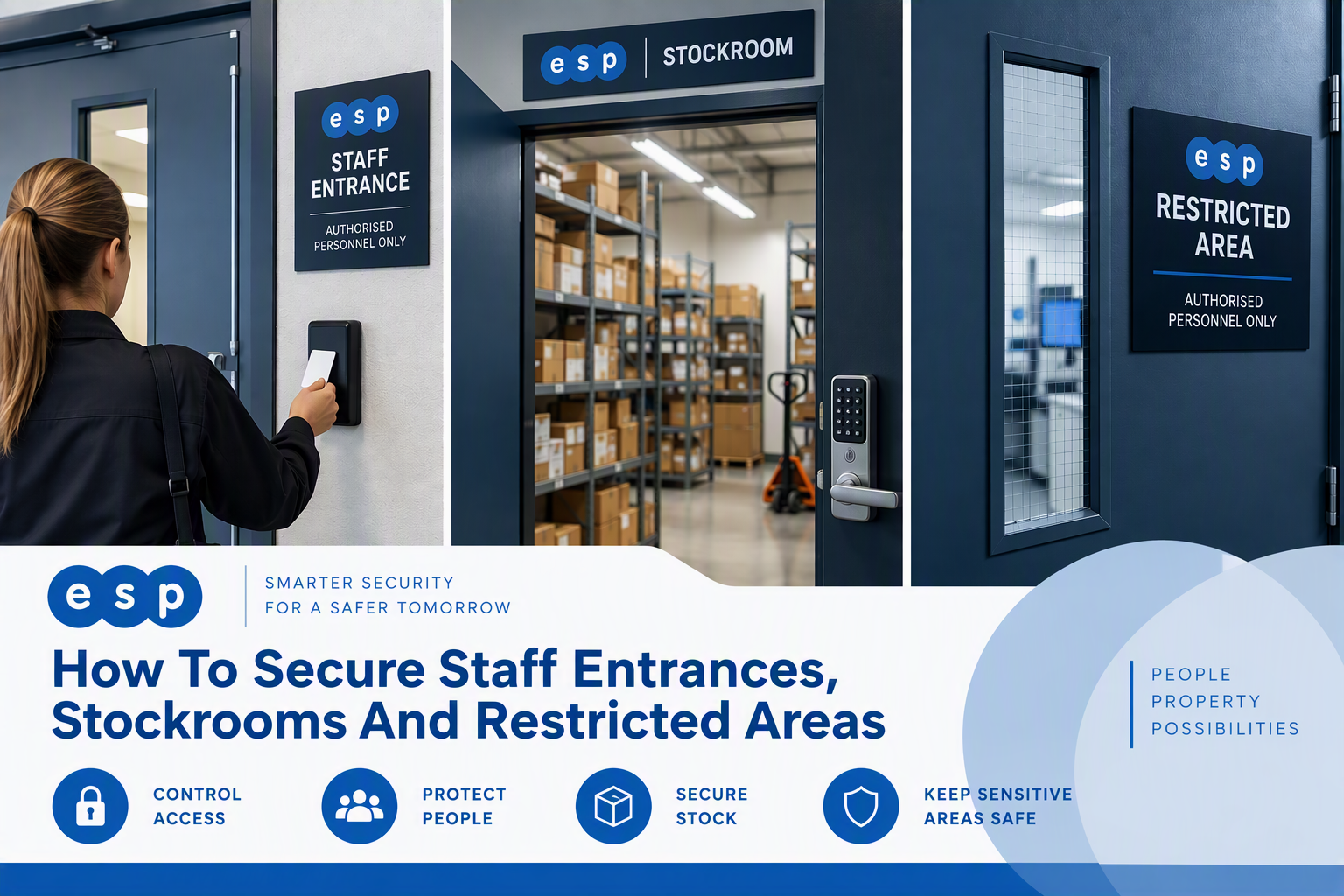
To secure staff entrances, stockrooms and restricted areas, use a layered approach: review the site layout, strengthen vulnerable doors, control who can enter each area, add CCTV where visibility is needed, keep access permissions up to date and make sure staff know the correct procedures.
That is the direct answer. No single product will secure a business premises on its own. A strong lock helps, but it will not show who entered. CCTV helps, but it does not stop a door being left open. Access control helps, but it still needs sensible permissions and regular management.
This guide explains how UK businesses can protect staff-only entrances, stockrooms, offices, server rooms, cash areas, plant rooms and other restricted spaces without overcomplicating the system.
Start With A Practical Security Review
Before changing doors or installing new equipment, walk through the building and map the areas that matter most. Mark staff entrances, visitor entrances, side doors, loading bays, stockrooms, offices, server cabinets, plant rooms and any areas where valuable equipment, stock or sensitive information is kept.
Then look at how people move through the premises. Staff, customers, visitors, cleaners, contractors and delivery drivers may all use the building differently. A door that feels convenient during the day may become a weakness after hours if it is not controlled properly.
The aim is to identify where access should be open, where it should be limited and where it should be recorded. This gives you a clear basis for practical security decisions rather than relying on guesswork.
Secure Staff Entrances Without Blocking Safe Movement
Staff entrances are often used throughout the day, which makes them important from both a security and safety point of view. They need to be easy for authorised people to use, but difficult for unauthorised people to exploit.
Start with the basics. Check that doors close properly, frames are in good condition, locks are suitable and external lighting is adequate. If a staff door is near a car park, yard or vehicle route, the surrounding area should also be reviewed. HSE guidance on separating pedestrians and vehicles highlights the importance of keeping vehicle routes far enough away from doors and pedestrian routes where safety could be affected.
Security should never create a dangerous route for staff or visitors. Fire exits, escape routes and doors used in emergencies must remain safe and usable while still being protected against misuse.
Use Access Control For Staff-Only Areas
Physical keys can work for small premises, but they become harder to manage as the business grows. Keys can be copied, lost, kept by former staff or shared with people who should not have them.
An electronic access control system gives the business more control. ESP Projects installs Paxton Net2 access control systems for commercial premises, including cards, fobs, PIN readers, electronic locks, door controllers, permissions and audit trails.
Access control is especially useful for staff entrances, stockrooms, offices, server rooms, plant rooms and restricted corridors. Permissions can be set by person, team, door or time of day, then changed quickly when roles change or someone leaves the business.
Control Stockroom Access More Carefully
Stockrooms often contain the items most at risk from theft, damage or poor control. The answer is not always to make access difficult for everyone. The better approach is to give the right people reliable access and keep everyone else out.
Consider who genuinely needs access to the stockroom. Retail teams, warehouse staff, managers, cleaners, contractors and delivery drivers may all need different rules. A temporary contractor may need access during a planned visit, but not after the work is complete.
For higher-value stock, extra layers may be sensible. This could include locked cabinets, caged areas, stronger internal doors, CCTV coverage, audit trails and a clear process for reporting missing items or unusual activity.
Add CCTV Where It Supports A Clear Purpose
CCTV can help deter unwanted behaviour, monitor key areas and provide useful evidence after an incident. For staff entrances, stockrooms and restricted spaces, the goal should be useful visibility rather than cameras everywhere.
ESP Projects supplies and installs commercial CCTV systems for businesses, primarily using Hikvision equipment. Cameras may be used around entrances, reception areas, stockroom doors, loading bays, yards, car parks and other high-risk spaces.
Camera placement should be planned carefully. A camera that captures the approach to a staff entrance may be more useful than one that only sees the door after someone has already entered. Likewise, CCTV around a stockroom should help confirm who entered, when they entered and what happened nearby.
If a business uses CCTV, data protection rules may apply. The ICO provides guidance for organisations using CCTV and video surveillance, including responsibilities around fair use, transparency and managing footage.
Plan CCTV And Access Control Together
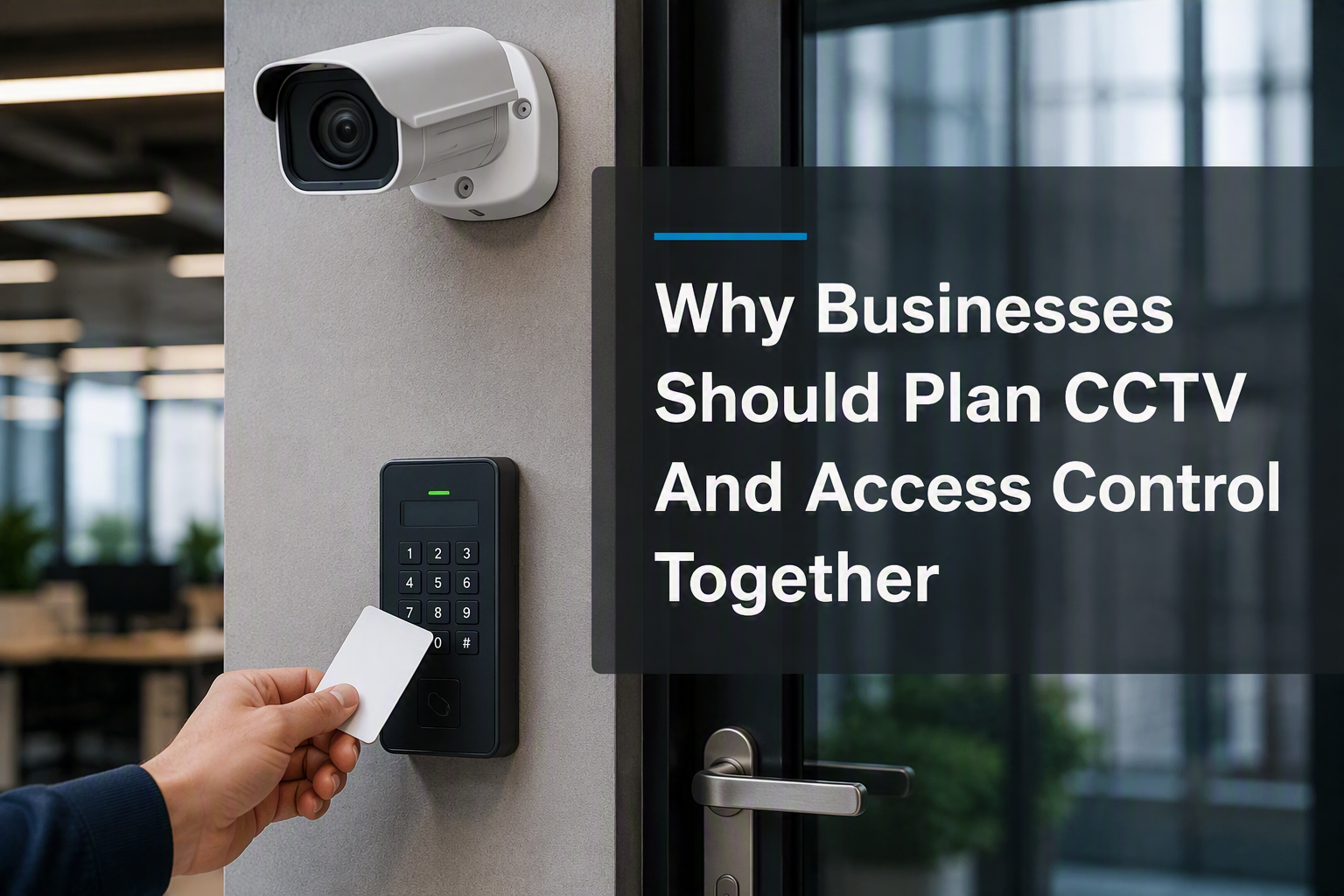
Access control and CCTV are stronger when they are planned together. Access control can show that a door was used at a certain time. CCTV can provide visual context around that event. Together, they can help a business understand what actually happened.
For example, a stockroom door audit trail may show a fob was used after hours. CCTV can help confirm whether the authorised person entered alone, whether someone followed them in or whether the door was held open. This is why many businesses benefit from considering the benefits of CCTV and access control as one joined-up project.
Planning both systems together can also reduce duplicated installation work. Cable routes, network switches, cabinet space and camera positions can be considered at the same time rather than being added separately later.
Set Clear Procedures For Visitors And Contractors
Unauthorised access does not always come from a forced door. It can happen when visitors are not signed in properly, contractors are left unaccompanied or staff hold doors open for people they do not recognise.
Create a simple visitor process. This may include signing in, confirming who they are meeting, issuing a visitor badge and making sure visitors do not walk into staff-only or stock areas without permission.
Contractors need the same level of control. If they need temporary access, give them access only for the areas and time period required. When the work is complete, remove or cancel that access promptly.
Review Keyless Entry And Permissions Regularly
Keyless access can make premises easier to manage, but only if permissions are kept up to date. Staff change roles, contractors finish projects and former employees should not retain access after they leave.
A regular access review helps keep the system accurate. Check who has access to staff entrances, stockrooms, offices, server rooms and restricted areas. Remove anyone who no longer needs access and update permissions where responsibilities have changed.
This is one of the practical advantages covered in the benefits of keyless access control. The system is only as strong as the way it is managed.
Do Not Forget The Network Behind The System
Modern access control, CCTV and intercom systems often rely on network infrastructure. Doors, cameras, readers, controllers and recorders may need cabling, switches, power and cabinet space.
ESP Projects provides structured data cabling for commercial premises, including Cat5e, Cat6, Cat6A and fibre optic cabling. Planning cabling early can make the final system neater, easier to support and better prepared for future upgrades.
Network security should also be considered. The NCSC network security fundamentals guidance explains the importance of understanding network architecture and protecting connected systems. That principle applies to physical security equipment as well as office IT.
Quick Checklist For Securing Restricted Areas
- Map staff entrances, stockrooms and restricted rooms
- Check doors, locks, frames, lighting and closing mechanisms
- Decide who genuinely needs access to each area
- Use access control for staff-only and high-risk spaces
- Position CCTV around key routes, doors and stock areas
- Keep visitor and contractor access controlled
- Review permissions when staff roles change
- Plan data cabling and network equipment early
- Agree who responds to alerts, incidents or unusual activity
Talk To Electronic Security Protection About Access Control And Security
Securing staff entrances, stockrooms and restricted areas is about creating the right combination of doors, access permissions, CCTV visibility, network infrastructure and procedures.
ESP can help businesses plan and install access control, CCTV and supporting infrastructure for offices, warehouses, workshops, retail premises, stockrooms and commercial buildings.
Call 0330 2020118 or contact Electronic Security Protection to discuss your premises and request a quotation.